As tourists explore Albania, they will discover a diverse array of regional dishes that vary from one area to another.
Albanian cuisine shares similarities with Turkish, Greek, and Italian culinary traditions, with each region offering its unique specialties. The cuisine is characterized by the use of various Mediterranean herbs, including oregano, black pepper, mint, rosemary, dill, and parsley. Olive oil and butter are key ingredients in many recipes, and most traditional dishes feature lamb, pork, beef, rabbit, or chicken.
Coastal regions such as Durrës, Vlorë, Shkodër, Lezhë, and Saranda are known for their seafood specialties. Vegetables are integral to most meals, with local farmers cultivating Mediterranean produce that is sold fresh in daily markets, where vendors start selling early in the morning.
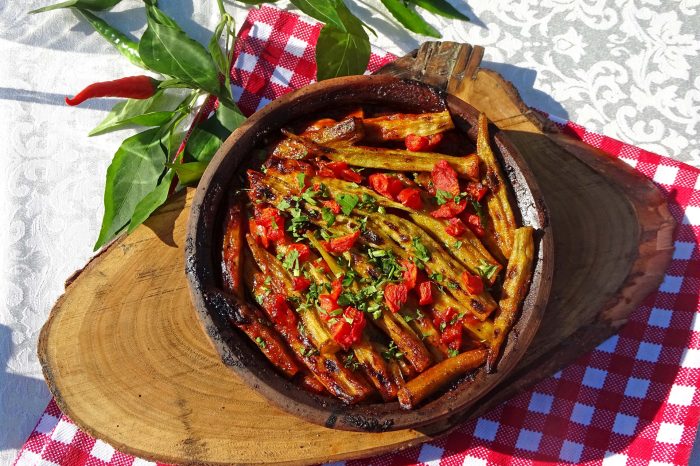
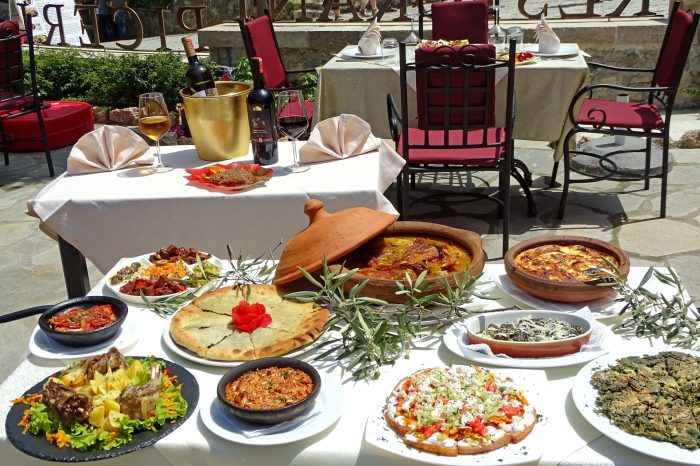
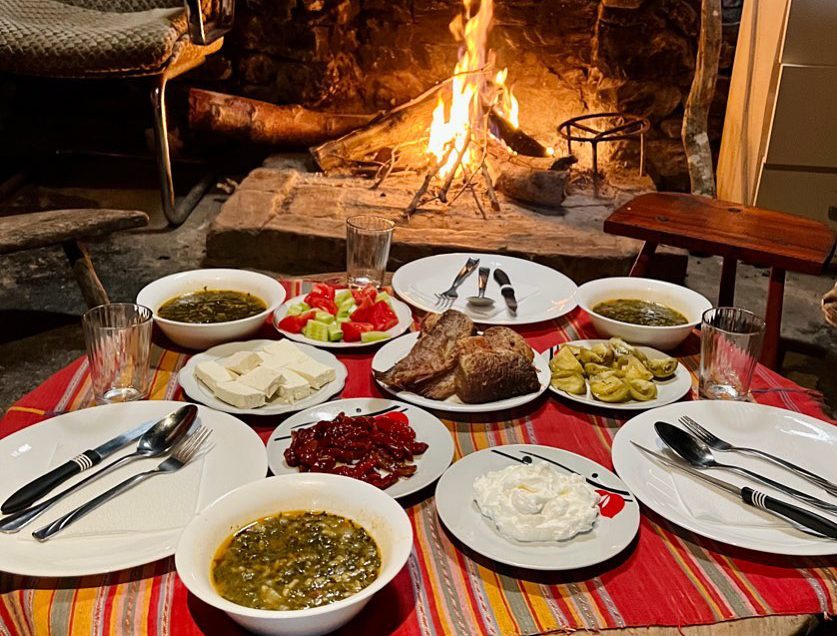
Lunch is the main meal for Albanians, typically consisting of several dishes. A common centerpiece is a slow-cooked meat and vegetable dish, accompanied by a fresh salad made with tomatoes, cucumbers, green peppers, and olives, dressed with olive oil, vinegar, and salt. Bread or cornbread is a staple on every Albanian table, leading to the expression in Albanian that equates having a meal with eating bread.
Other traditional offerings include marinated vegetables in vinegar, pickled cabbage, sardines with lemon, stuffed eggplant, and “dollma” (vine leaves filled with rice). Appetizers often feature cured meats, sausages, and farmhouse cheese, served alongside peppers, marinated green olives, and garlic.
A notable traditional dish is “papare,” which consists of bread boiled in hot water and combined with eggs and a unique type of cheese or curd. “Trahana,” another Albanian specialty of Turkish origin, is made from wheat flour and yogurt. During the summer, “tarator,” a chilled soup made with yogurt, cucumber, olive oil, and minced garlic, is particularly popular.
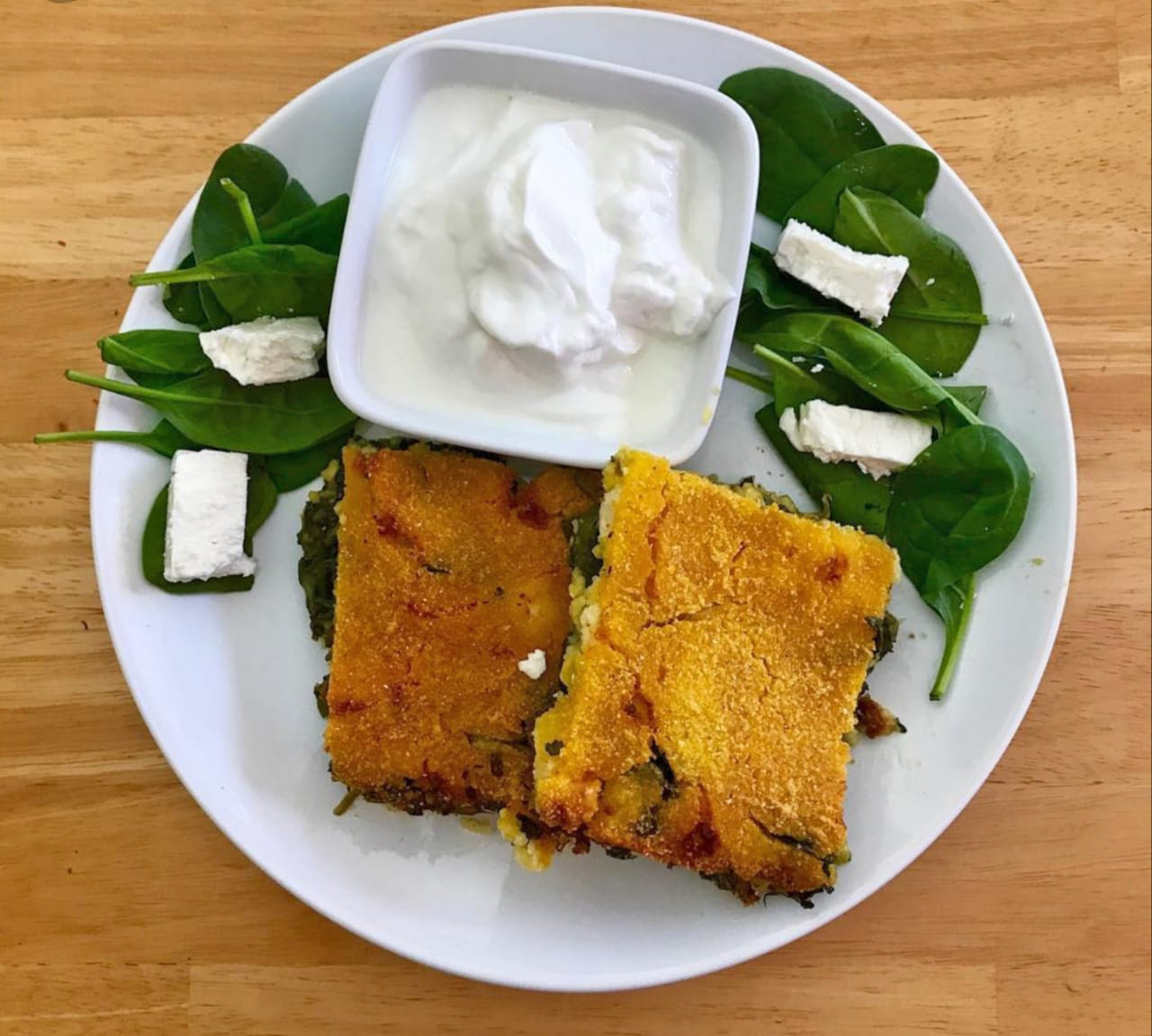
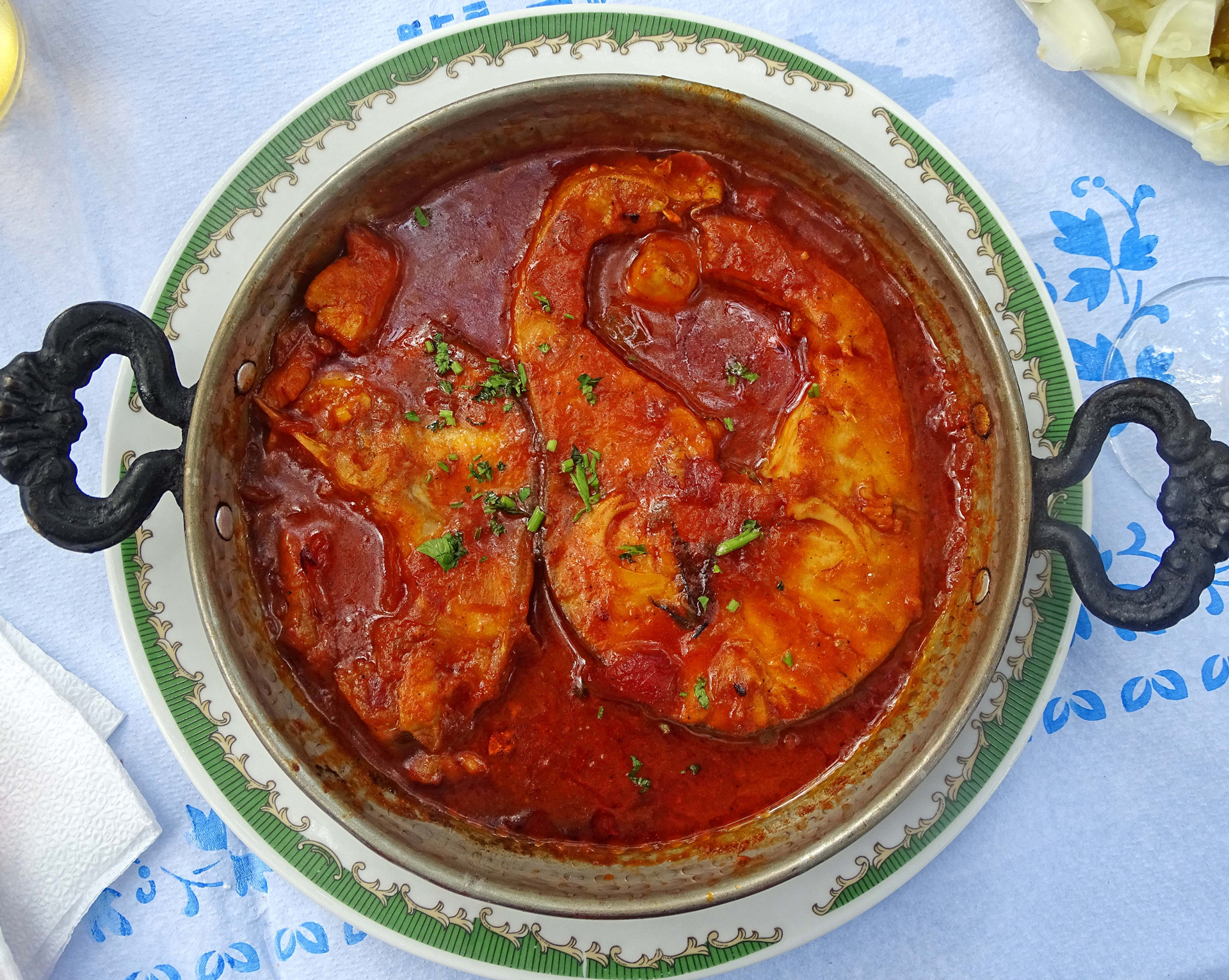
Additionally, Albanians pride themselves on traditional fish casseroles, typically prepared with onions and tomatoes if using trout, or with olive oil, garlic, and assorted vegetables for other types of fish. Regional specialties include the koran casserole from Pogradec and carp casserole from Shkodër. The yogurt casserole, especially common in Middle Albania, particularly in Elbasan, is a dish that is hard to find elsewhere.
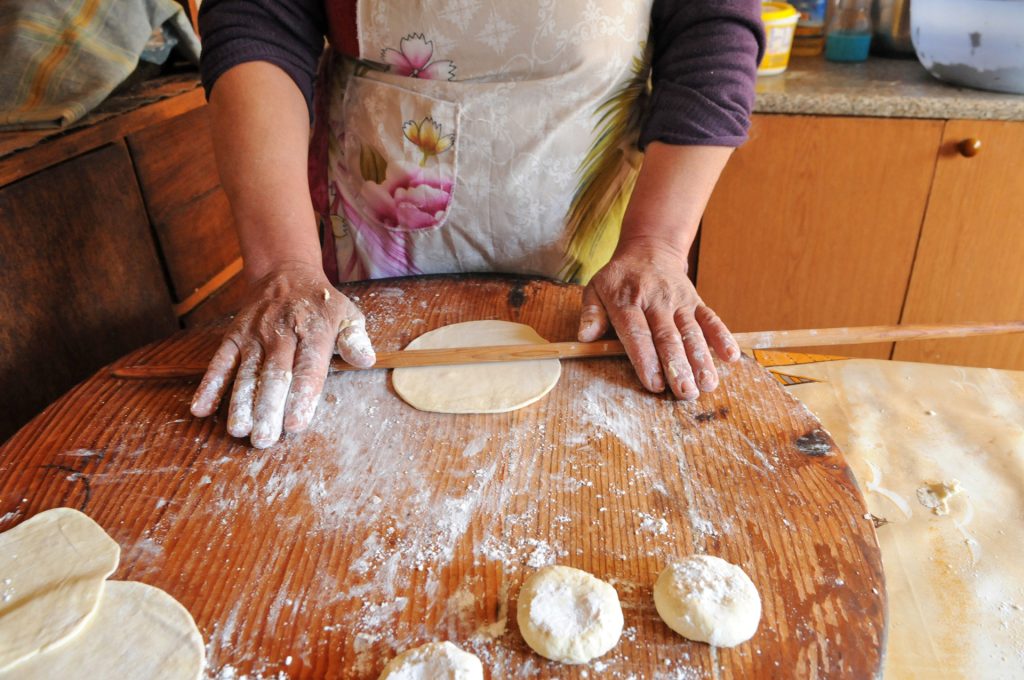
The Albanian vegetable pie may include ingredients such as sliced cheese, spinach, cabbage, or meat. Its layers can consist of either dough sheets or fritters. Additionally, pumpkin is another vegetable that is often served stuffed with various fillings. It can also be prepared as a puree, seasoned with butter, salt, or sugar (the type typically used in candies). Albanian baklava resembles the versions found in Turkey and Greece, yet it boasts a distinctive flavor in certain regions and families. The most renowned baklava is that of Berat.
Common Desserts in Albania are:
- Kadaif
- Revani
- Sultjashi (rice with milk and sugar)
- Pandispanjë
- Qumështor
- Bakllava
- Sheqerpare
- Kek
- Shëndetlie (made with honey)
- Kabuni
- Crème caramel (fudge)
- Zupa
- Trileçe
- Tollumba
- Jam
Typical Albanian Beverages are:
- Fizzy and mineral water
- Milk
- Yogurt
- Mountain tea
- Various fruit juices and cold drinks
- Buttermilk
- Beer (notable local varieties include “Birra Tirana” and “Birra Korça”)
- Boza (popular fermented beverage originating from Turkish)
- Rakia (an alcoholic drink)
- Brandy (the native type is “Skënderbeu”)
- Albanian wine
Albanian Rakia
Rakia is renowned as the finest homemade beverage and has a rich tradition. Made through the distillation of fermented fruits, rakia is a popular alcoholic drink throughout the Balkan region. Typically containing 40% alcohol, homemade rakia often has a higher alcohol content, ranging from 50% to 60%. It is recognized as a traditional drink in several countries, including Albania, Bulgaria, Bosnia and Herzegovina, Croatia, Macedonia, Montenegro, Serbia, and Turkey. Common flavors include those from plums, apricots, and grapes, with fruits such as peaches, apples, pears, cherries, figs, and blackberries often used in its production. In Albania, rakia is commonly made from grapes—especially in milder climates—and plums, with mulberries or walnuts sometimes used in colder regions. Blends of plum and grape rakia may also incorporate additional ingredients like spices, honey, sour cherries, and walnuts.
Unique to Albania, rakia has evolved significantly since the Ottoman Empire, when taverns primarily served wine and snacks due to religious restrictions imposed by sultans. Despite a non-Muslim presence in many taverns, authorities enforced Sheriat law. However, during the more liberal “Tanzimat” period (1839-1876), rakia gained popularity in taverns, eventually surpassing wine consumption by the century’s end.
The distillation of Albanian rakia, particularly from grapes and plums, occurs in copper or aluminum cauldrons, often taking several days and serving as a time for family and social gatherings. It is uncommon for homemade rakia to be sold commercially, differentiating it from industrial products; it is typically found only in households that produce it and some restaurants.
Artisanal rakia from Skrapari and Përmeti in southern Albania is especially famous and highly regarded. Additionally, in colder regions such as Dibër, Korçë, and Pogradec, plum rakia (known as shliva, a Slavik word meaning plum) is also well-known. A popular myth suggests that the strength of rakia can be gauged by the size of the bubbles formed when the bottle is shaken.
Other “Made in Albania” Drinks
Wine
The tradition of wine production in Albania dates to ancient times and has thrived along the southwestern coast of the Balkans for over 3,000 years. The Illyrians had a long-standing heritage in viticulture and winemaking, as evidenced by archaeological finds in locations such as Lin (Pogradec), Tepe (Elbasan), and Zgërdhesh (Krujë). However, the Ottoman occupation significantly separated Albania from its winemaking tradition, leading to a decline in vineyard cultivation as well.
The fall of the Ottoman Empire played a notable role in reviving this tradition, albeit in a more artisanal and somewhat rudimentary manner primarily to satisfy family needs. The industrialization of wine production saw significant progress after World War II, peaking between 1972 and 1973 when Albania boasted 23 canteens and 47 wineries. Among the notable establishments was “Kantina e Leskovikut,” which was the first canteen opened in 1952. This was followed by wineries in Tirana, Shkodra, Librazhdi, Milot, and the creation of the “Skënderbeu” Canteen in Durrës, which consolidated various types of Albanian wines for processing and subsequent export.
Today, wine production is centered around the “Skënderbeu” winery in Durrës, the “Luani” winery in Berat, as well as the canteens in Librazhdi and Gjirokastra, among others. A significant portion of Albania’s wine is produced in approximately 40 private wineries, which have emerged in towns like Leskovik, Përmet, Vlorë, Mallakastër, and Tepelenë. Notable red wines include “Shesh i Zi” (Tirana, Durrës), “Cabernet” and “Merlot” (Berat, Lushnje, Përmet, Vlorë, etc.), and “Kallmet” (Shkodër, Peshkopi), along with “Pino e Zezë” and “Mavrud” (Leskovik, Shkodër, Lushnje). The white wines worth mentioning are “Shesh i Bardhë” (Tirana) and “Riesling” (Durrës), among others.
Brandy
The “Gjergj Kastrioti Skënderbeu” brandy has long been recognized for its quality in both the Albanian and international markets, including countries such as Slovenia, Croatia, Macedonia, Kosovo, Serbia, Montenegro, Bosnia, Bulgaria, Poland, Romania, Hungary, the Czech Republic, Switzerland, the Russian Federation, Germany, Italy, Greece, the USA, Australia, Great Britain, among others. In 1970, it participated in the International Fair in Plovdiv, Bulgaria, where it was awarded a bronze medal. In 1972, it took part in the International Wine and Brandy Competition in Bulgaria and again secured a bronze medal. At the 9th Wine Competition held in Durrës in 1981, it received a gold medal for the Skënderbeu brandy from 1974 and 1996.
Boza
The Albanian beverage, boza, gained popularity through a decree from the Sultan. Known for its low alcohol content of approximately 1%, boza is a fermented drink that is particularly favored in the Balkan region, especially in Albania. It consists of four main ingredients: corn flour, wheat flour, sugar, and water. Its flavor can range from sweet to sour, and it is predominantly enjoyed as a refreshing drink during the summer. The unique characteristics of Albanian boza set it apart from versions made in countries like Turkey, Bulgaria, and Macedonia, which typically use wheat, barley, millet, and chickpeas as their primary ingredients.
Boza first appeared in ancient Mesopotamia around the 9th millennia BCE and later spread through the Balkan region. In the 16th century, Sultan II prohibited the production of a variant known as “tartare,” which contained opium, in favor of a sweet, non-alcoholic white boza produced in Albania. The following century saw Sultan Mehmeti IV forbid all alcoholic drinks, including traditional boza, which paradoxically contributed to the rise of Albanian boza, leading to its peak popularity in the 19th century, surpassing even the Armenian variety.
Today, boza is primarily produced in the northern region of Albania, particularly in Kukës, where it is often made using artisanal methods and traditional recipes passed down through generations. The recipe calls for three parts yellow corn flour, one part brown wheat flour, and 10% liquid sugar. The flour is combined with cold water until smooth, then boiled in a cauldron for eight hours until it emits a scent reminiscent of baked bread, earning it the name “baked boza.” After cooling and thickening, it is diluted with cold water and transferred to wooden troughs, where ferment—either from a previous batch of boza or yeast—is added. Over the next 24 hours, the mixture expands, produces bubbles, and smells like yeast-risen bread. At this stage, the mixture is pressed in a wooden container to separate the bran, allowing the liquid to settle at the bottom while the grain remains on top. The liquid is then ready to be boiled and served.
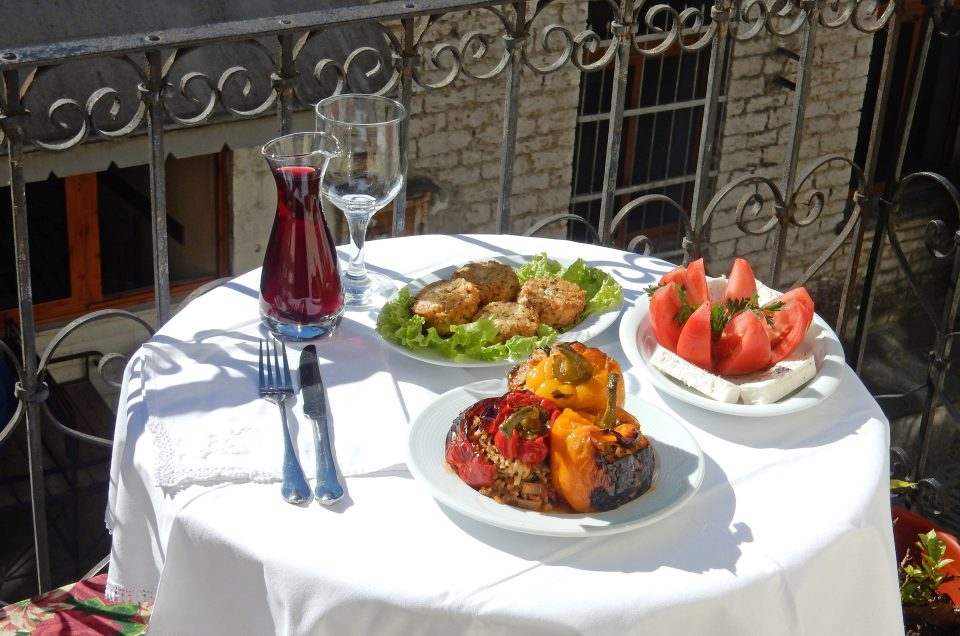
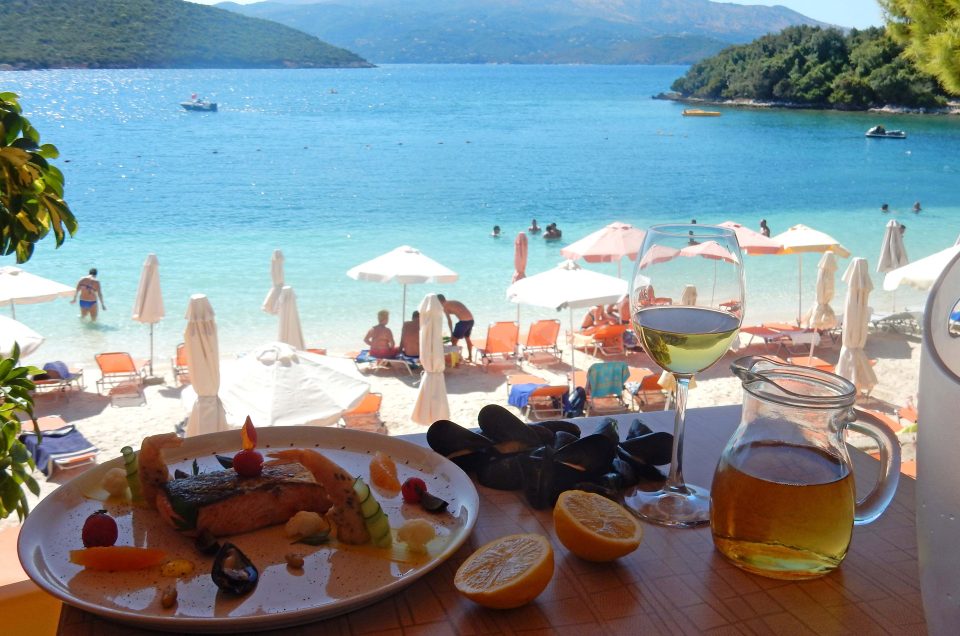
Albanian cuisine embodies a blend of traditional Balkan, Turkish and European influences, with these regional cuisines also drawing some characteristics from Albanian culinary traditions. Renowned for its high nutritional value and rich flavors, Albanian cuisine showcases a variety of specialties from nearly every region. Roasted meats and an assortment of beverages are popular throughout the country. The southern and central regions of Albania are particularly noted for their extensive use of vegetables, olive oil, spices, and lemon. Among the notable dishes are carp casserole and alcoran prepared with walnuts, especially in Pogradec. The coastal areas along the Ionian and Adriatic Seas are celebrated for their fish-based dishes.
Several dishes commonly found in other Balkan and Asia Minor countries, such as baklava, kadaif, sheqerpare, and hashure, are also enjoyed in Albania. One of the most traditional desserts is “bollokume,” which is made in the town of Elbasan. As already mentioned, the most iconic alcoholic beverage produced in Albania is rakia, a type of brandy made from grapes. Grape and plum rakia is created in various regions, including Korçë and Dibër, while mulberry raki is produced in Boboshticë.