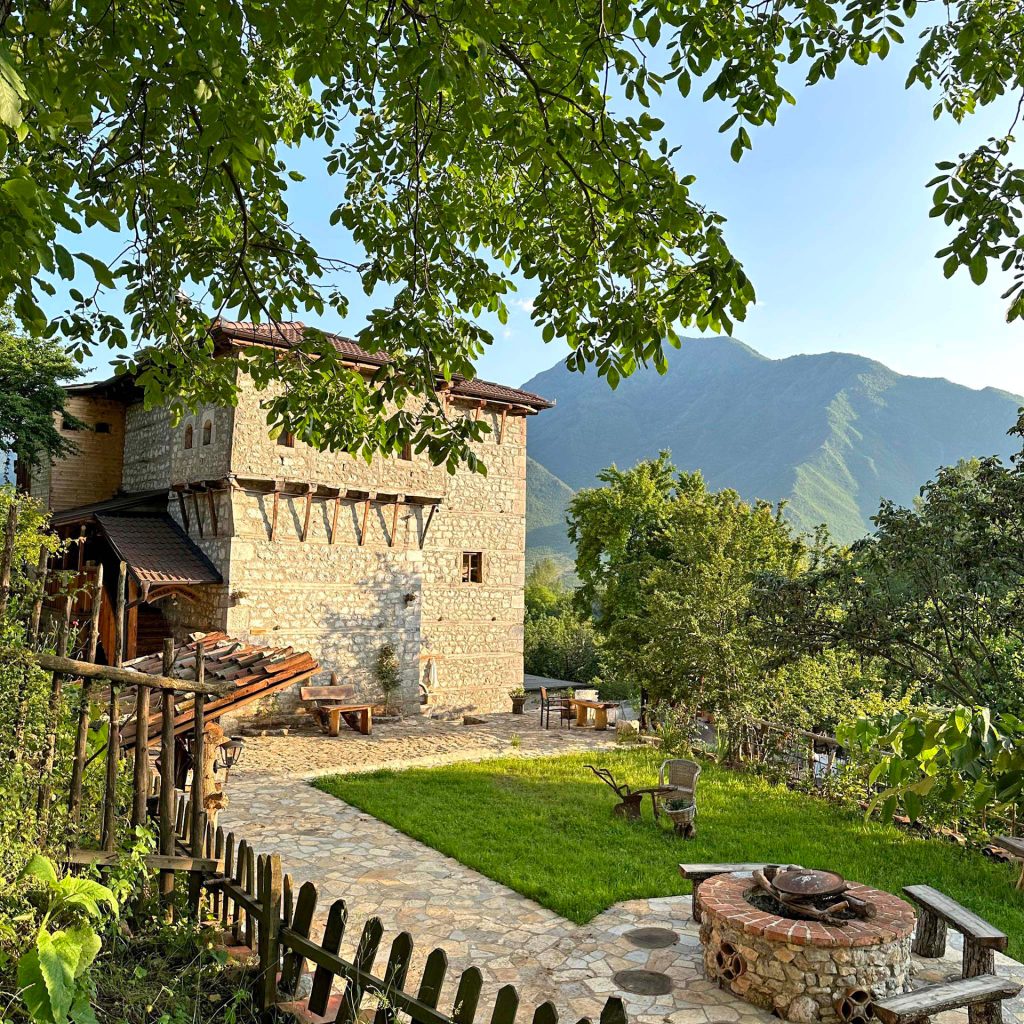
Tower houses, or “Kulla” in Albanian (from Arabic “Kula” meaning “fort” and Persian “qulla” meaning “mountain”), are fortified structures with small windows and shooting holes, primarily for security during conflicts. These architectural styles existed in Albania before the Ottoman invasion, particularly in Gjirokastër, dating back to the 13th century. Albanologist Milan Shuflaj notes that Romano-Byzantine fortifications evolved into small castles by the 14th century, serving as prototypes for multi-story houses in Albania and Montenegro, still constructed by tribal chieftains into the 20th century. The roots of these Balkan towers trace back to the Southern Albania and Old Epirus, influenced by Western knights’ castles. In the north, the proliferation of such towers became notable during the decline of the Serbian Kingdom and the increasing threat from the Turks. Additionally, the expansion of knightly castles in the North served as intermediaries for the residences of smaller Albanian dynasties in the interior villages, particularly after some of these families, like the Topiaj and Dukagjins, had ceased to reside in the fortified cities of Durrës and Lezha, respectively, following their capture by Venice.
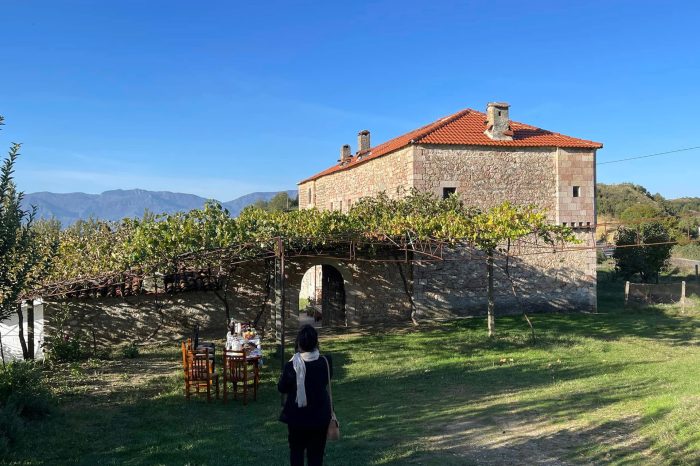
The tower houses are heavily fortified structures featuring small windows and shooting holes, designed mainly for security during conflicts. In Albanian, these tower houses are referred to as “Kulla,” meaning “tower,” which derives from the Arabic word “Kula” (meaning “fort, fortress”) and the Persian term “qulla” (meaning “mountain” or “top”). Architectural styles of tower houses existed in Albania prior to the Ottoman invasion of the Balkans, particularly in Gjirokastër, dating back to the 13th century. According to the prominent Albanologist Milan Shuflaj: “…the Romano-Byzantine fortifications that remained alive received a new addition in the 14th century. These were the small castles of the dynasties or provinces. These are the prototype of the houses with two or more floors of Albania and Montenegro, which are called kulla in Albanian and which are continued to be built by the powerful tribal chieftains (20s of the 20th century). The cradle of these Balkan towers in was in the Principality of Achaea, because here the castle of the knights of the West spread from the Latin (Catholic) rulers, as the facts in these regions testify. The spread of such towers was supported and became common during the destruction of the Serbian Kingdom and especially when the Turkish danger began to threaten.
Typically, the tower houses were constructed from stone, rising three or four stories, and were either square or rectangular in shape. They served dual purposes: acting as watchtowers for defensive strategies and providing residential space to protect extended families. The earliest kullas in the north were constructed in the 17th century, a period marked by ongoing hostilities in the Dukagjin region of northern Albania, although most surviving examples date from the 18th or 19th century. Kullas are often integrated into complexes of buildings serving various functions, but in urban areas, they typically stand alone. Their placement within these complexes allows inhabitants to monitor the surrounding landscape effectively. In towns, kullas are usually standalone, while in villages, they are more commonly part of a larger assembly of kullas and stone houses, generally organized by family clan. Some kullas served as isolation spaces and safe havens, known as “locked towers” (kulla ngujimi), intended for individuals targeted in feuds or conflicts.
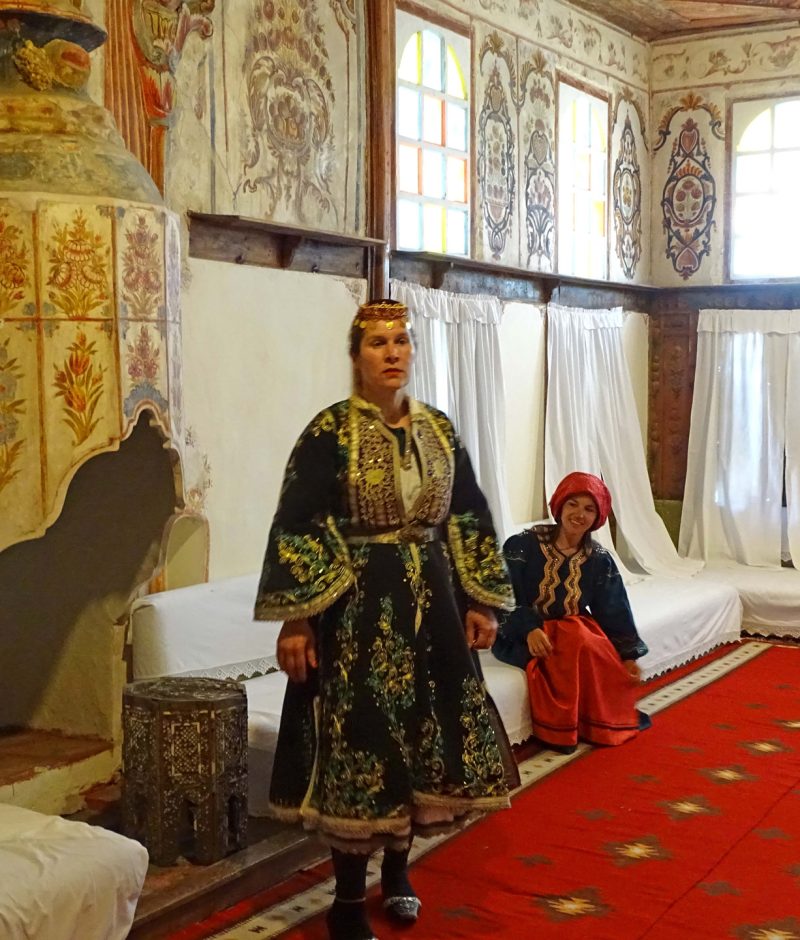
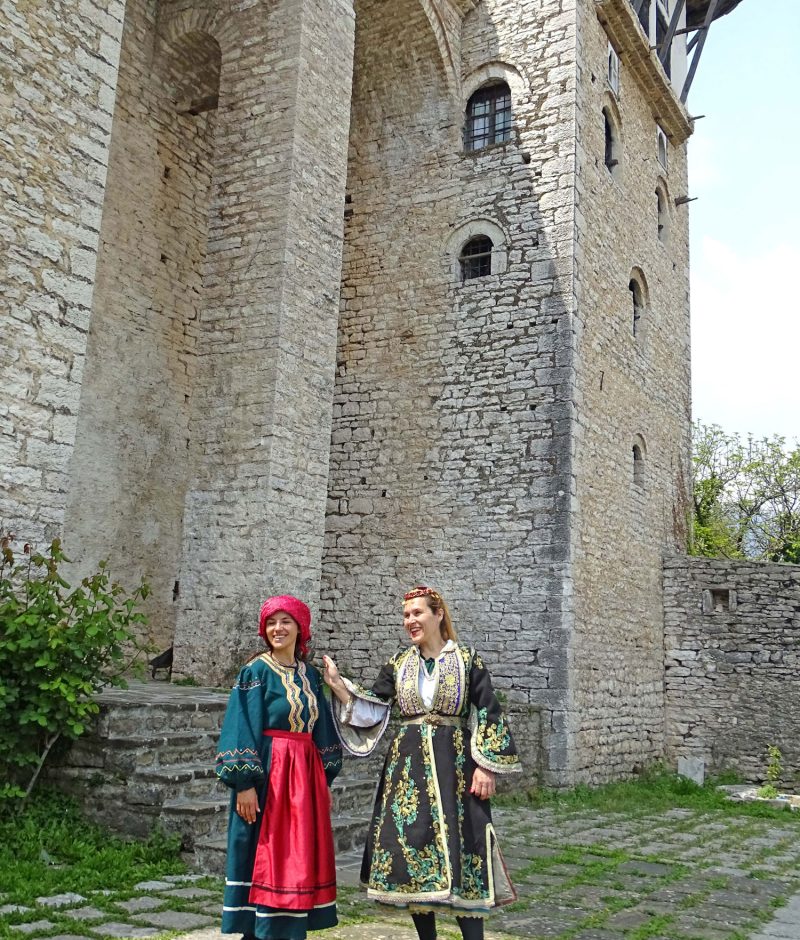
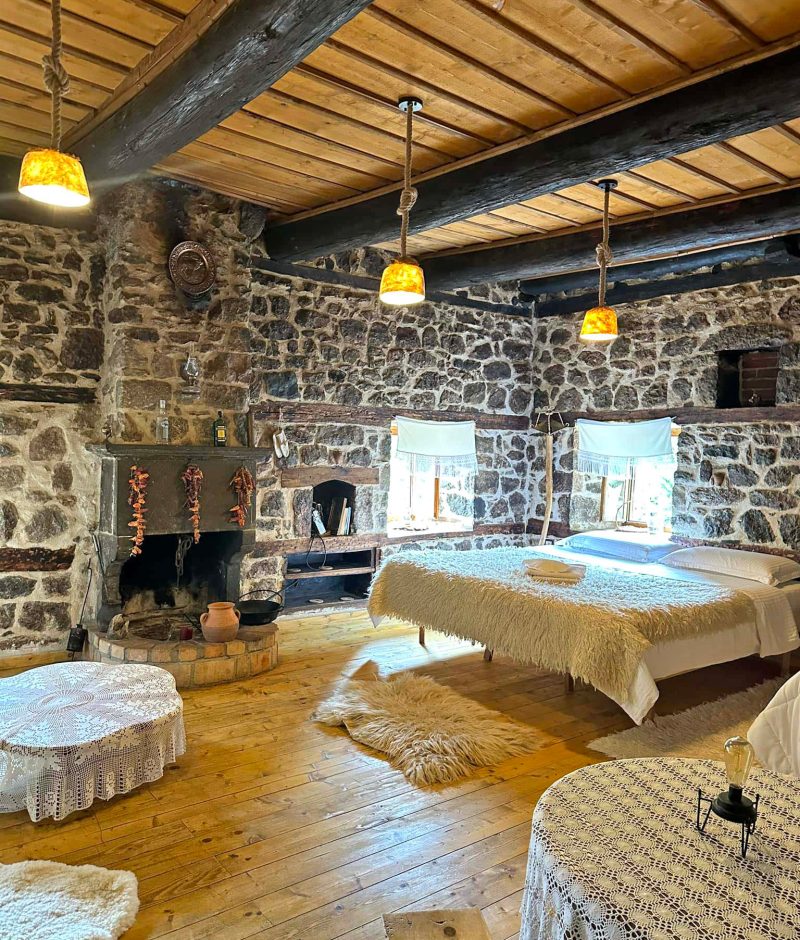
The outer walls of a kulla can reach thicknesses of up to one meter at the base, tapering gradually as they ascend toward the roof. Incorporated into these walls are small, narrow openings known as frëngji. These openings serve a dual function: they provide limited natural light and ventilation while also acting as defensive loopholes for inhabitants to fend off attackers. The fortress-like structure of kullas emerged as a response to the frequent conflicts and blood feuds (gjakmarrja) prevalent in the Balkans during the Ottoman era.
Following the occupation of Albania by the Ottoman Empire, the construction of houses, particularly in urban areas, took on a different direction. Instead of focusing on fortified structures, affluent residents began to build more elegant and aesthetically pleasing homes, incorporating defensive features as well. The city of Gjirokastra serves as an excellent example of this architectural style. It is also notable as the birthplace of several significant figures in Albanian history, most famously Enver Hoxha, the former communist dictator. His birthplace, which had previously suffered from a fire, was transformed into the city’s Ethnographic Museum. In this four-story house-museum, visitors can learn about the life of a typical Gjirokastra family in the 1800s, as well as view costumes and other period furnishings. Admission to the museum costs 200 Lekë. Gjirokastra is renowned for its other house museums as well. Among them, the House of the Zakat is particularly striking with its two towers, making it an eye-catching feature as you enter the city. It stands as one of the finest examples of Ottoman architecture in the area. While in Gjirokastra, you should also visit the Skënduli House, constructed in the early 1700s, along with other notable residences such as the home of writer Ismail Kadare and the Babameto House.
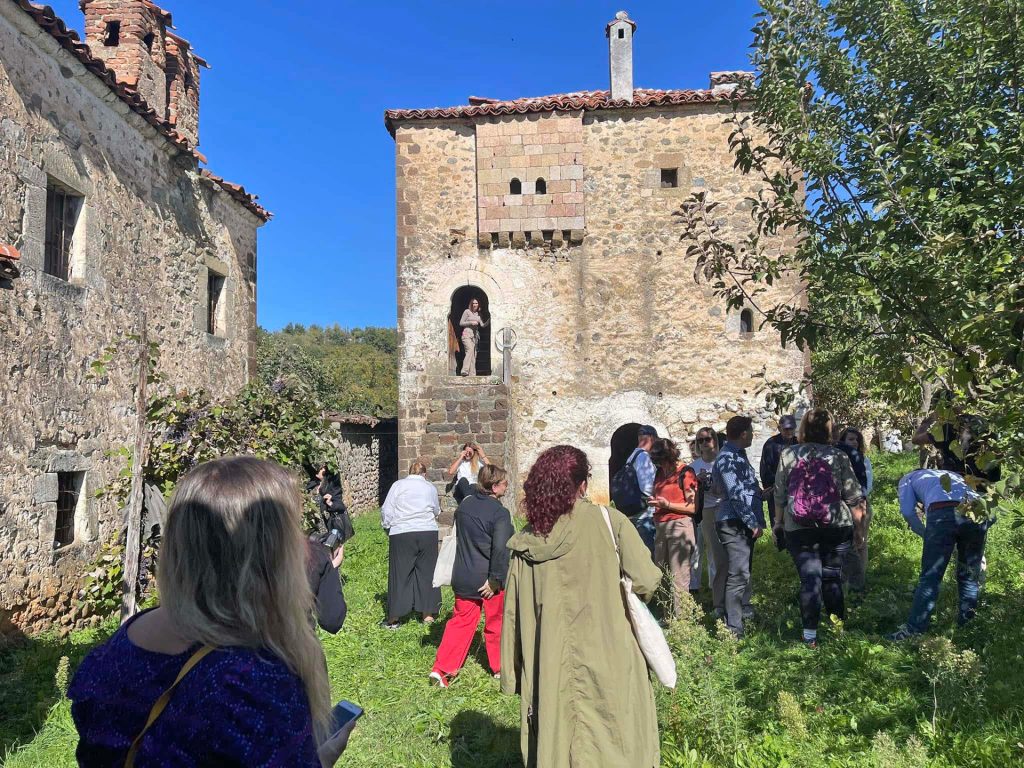
Tower Houses of Kosova
In Kosovo, traditional kullas, built primarily from the 18th to early 20th century, are two- or three-storey structures made of locally sourced stone, often featuring decorative wooden elements on upper floors. Historically, these buildings were exclusively occupied by men, with women and children living in a connected annexe. The thick exterior walls, measuring a meter at ground level, taper towards the roof. Small windows, known as frëngji, were designed for defense against attacks. Kulla life in Kosovo is significantly influenced by Muslim culture, emphasizing gender segregation in social spaces, reflected in their double sets of entrances and staircases—only the side entrance leads to private family areas. Their design also optimally adapts to Kosovo’s climate, keeping interiors cool in summer and warm in winter.
In addition to their defensive role, kullas were built to endure the region’s climate. Their thick stone walls offer insulation, ensuring that the interiors remain cool in the summer and warm in the winter. This natural climate control makes them particularly suitable for Kosovo’s continental climate, characterized by hot summers and cold winters. Several historic kullas still stand today, serving as monuments of cultural heritage. Notable examples in Kosovo include:
- Jashar Pasha’s Tower (Kulla e Jashar Pashës) – located in Gjakova, this kulla is one of the best-preserved examples.
- Haxhi Zeka’s Tower (Kulla e Haxhi Zekës) – situated in Peja, it was owned by Haxhi Zeka, a significant nationalist and political figure.
- Xhafer Syla’s Tower (Kulla e Xhafer Sylës) – a well-maintained kulla from the Dukagjini region.
- Mazrekaj Tower (Kulla e Mazrekajve) – located in Junik, it showcases traditional kulla architecture.
- Janjevo Tower (Kulla e Janjevës) – illustrating an adapted kulla design in central Kosova.
- Tomić’s Tower (Kulla e Tomiçit) – a Serb-owned kulla in Kosova, highlighting the architectural exchanges among communities.
Osdautaj’s Tower (Kulla e Osdautajve) – located in Isniq, noted for its well-preserved Ottoman-era architecture.
Despite their cultural and historical significance, many kullas in Kosova have suffered from neglect and damage due to war and insufficient preservation efforts. While some have been restored and repurposed as museums or cultural heritage sites, others remain at risk of deterioration. Preservation initiatives led by the Ministry of Culture, Youth, and Sports of Kosova, along with international projects like Ilucidare, aim to document and safeguard these unique structures.