The story of Albanian nation is shaped by its people—heroes, poets, rebels, teachers, and everyday individuals who proudly carry their culture forward. Albanians honor those who have formed the Albanian identity, from national icons like Gjergj Kastrioti Skënderbeg, who resisted Ottoman rule, to Mother Teresa, a global symbol of compassion. They also celebrate unsung figures such as: storytellers, musicians, artisans, farmers, and elders who preserve traditions across generations, whether in the highlands of Tropoja, the plains of Myzeqe, or diaspora communities. Their epic songs include historic figures who fought for freedom and justice, folk heroes and legends from oral tradition, artists and writers who amplified Albania’s voice, diaspora stories showcasing the painful emigration as well thriving Albanian identity abroad, portraits of everyday life reflecting resilience and simplicity
Together, these narratives create a rich tapestry of pride, struggle, creativity, and a deep connection to the homeland.
Traditional Values
Albanian traditions are the nation’s essence, embodying customs and rituals that have shaped life for centuries, passed down with pride. They reflect identity, values, and connection to the land, rooted in pagan and religious practices.
From multi-day weddings filled with music and dance to seasonal celebrations for harvests and saints, every region offers unique rituals that honor family, nature, and hospitality. Key pillars of Albanian tradition include:
- Kanun: The Kanun, or the Code, is a crucial element of Albania’s historical and cultural identity, governing aspects of life such as family, honor, and property through oral tradition. Attributed to 15th-century nobleman Lekë Dukagjini, its origins may reflect ancient customs, and while it began as a regional code in northern Albania, it eventually influenced nationwide legal and social practices. Central to the Kanun is the principle of “besa”, which emphasizes honor and trustworthiness, crucial to maintaining personal reputation. The Kanun underscores the importance of the extended family, or “fis”, which plays a key role in social organization and dispute resolution, and it outlines inheritance practices that favor continuity within family lines. Overall, the Kanun has shaped Albanian society by establishing cultural norms and providing a framework for justice, fostering a sense of order and communal identity.
- Besa (The Word of Honor): A moral code from the Kanun that emphasizes protection and trust.
- Hospitality (Mikpritja): Viewing guests as sacred, embodying generosity and humility.
- Weddings (Dasma): Lavish, multi-day ceremonies with traditional attire, music, and symbolic rituals.
- Feasts & Seasonal Celebrations, tradition that goes back to Pelasgian and Illyrian times:
- Dita e Verës (Day of Summer) on March 14th, welcoming spring with treats and bonfires.
- Shën Gjergji and Shën Kolli: Celebrated saint days with family gatherings.
- Rites of Passage: Unique customs for significant life events, marked by songs and rituals.
Elders preserve many customs, while younger generations and diaspora communities rediscover and celebrate them. Exploring these traditions reveals a resilient, welcoming people proud of their heritage and deeply connected to their culture.
Echoes of the Land - Traditional Music and Dance
Albanian traditional music is a powerful expression of identity, memory, and emotion, echoing through generations. Influenced by centuries of isolation and oral storytelling, folk music varies by region while embodying a strong sense of belonging. In the north, it features epic narratives sung by men with the lute-like çifteli, while the south showcases iso-polyphony, recognized by UNESCO for its harmonies passed down through generations. Albanian music profoundly connects to life events—births, weddings, funerals, and harvests—where each note tells a story, expressed through instruments such as:
- Çifteliaand lahuta: Symbols of heroic tales in the north
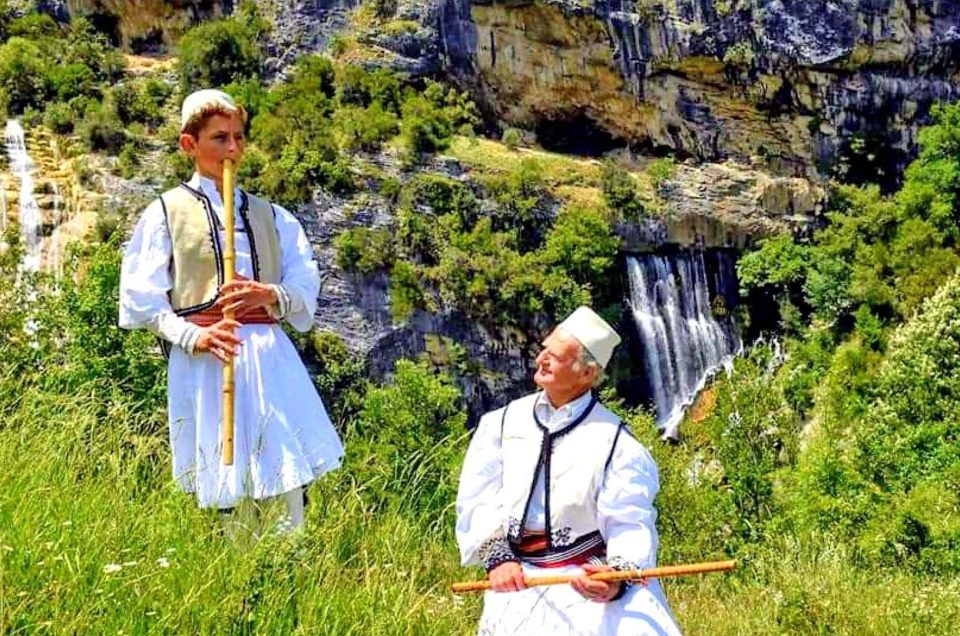
- Fyelli (flute) and defi(drum): Used in shepherd life and dances
- Lodra, zurla,and gajde: Integral to highland rituals
- Vocals: Often emotional and unaccompanied
The music also reflects the Kanun (set of laws that cover all aspects of life), hospitality practices, and seasonal cycles, featuring songs about love, honor, and daily work. Today, traditional music is experiencing a revival, as young artists blend ancient tunes with modern styles, and villages host festivals to preserve these melodies. Listening to Albanian traditional music is to engage with the proud and eternal voice of its mountains, valleys, and people.
Vallja (dance) is a cherished national tradition in Albania, with distinct regional styles shaped by local landscapes, histories, and cultures:
- Northern Albania(Malësia, Tropoja, Kukës): Powerful, fast-paced dances characterized by sharp stomping and proud movements, symbolizing strength, resistance, and tribal unity.
- Southern Albania (Gjirokastër, Përmet, Labëri):Lyrical and fluid dances where men and women move together in harmony, highlighted by slower yet elegant steps and polyphonic singing.
- Central Albania (Tirana, Elbasan, Kavaja):Dances that blend northern and southern influences, emphasizing social harmony and festive celebration.
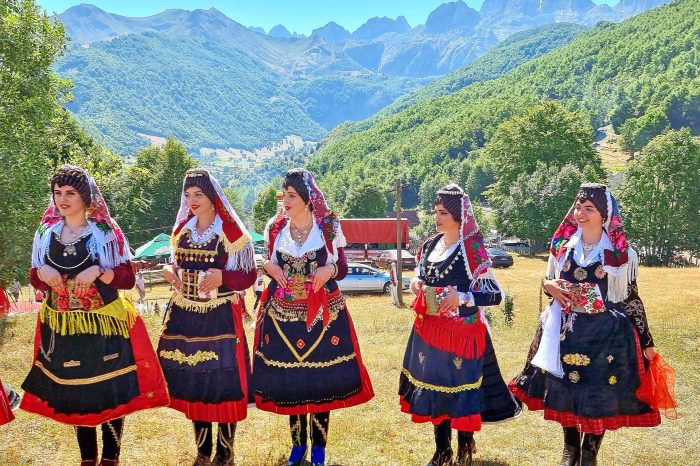
In 2023, “Këcimi i Tropojës” (Dance of Tropoja) was added to the UNESCO List of Intangible Cultural Heritage. This vibrant Northern Albanian dance features dynamic footwork with strong stomps and quick rotations, shouts, claps, and traditional instruments like the lahuta and defi. Elaborate costumes, including men’s white tirqe and women’s embroidered aprons, a symbol of unity, often performed at weddings and festivals. The këcim is more than a dance; it conveys emotion, narrates stories, and strengthens community ties.
Albanian Traditional Dress
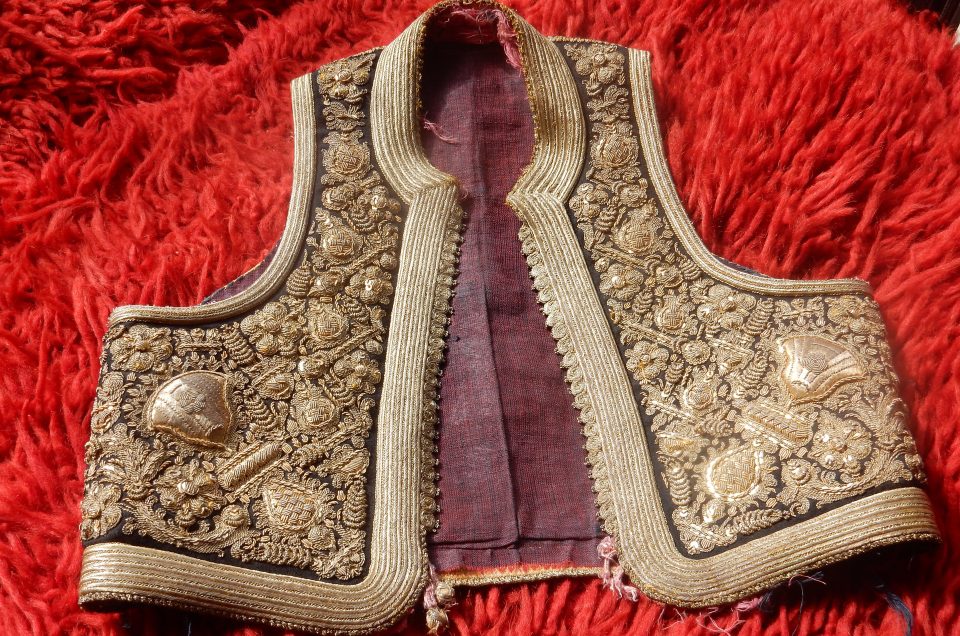
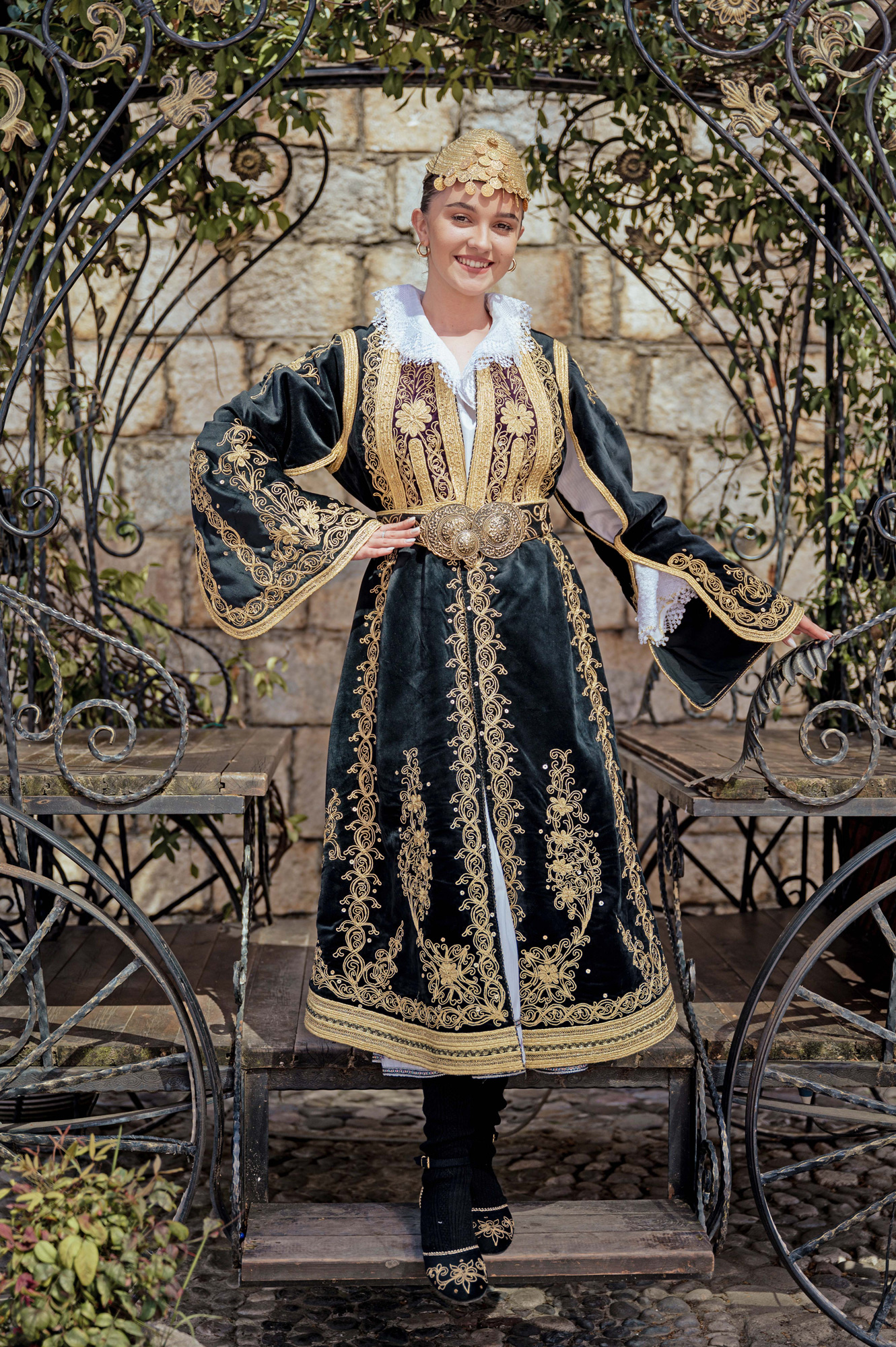
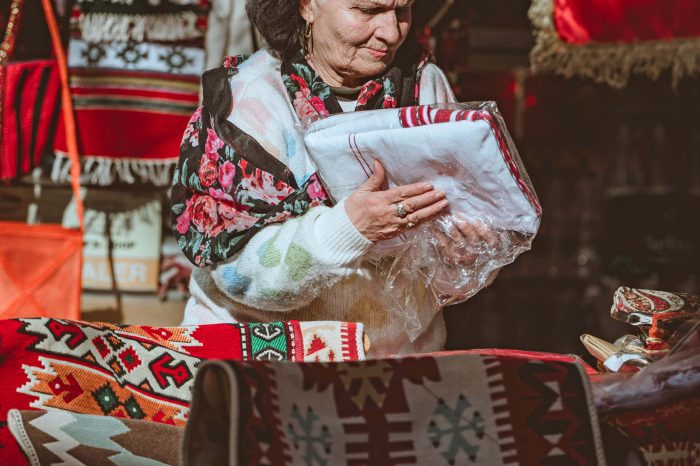
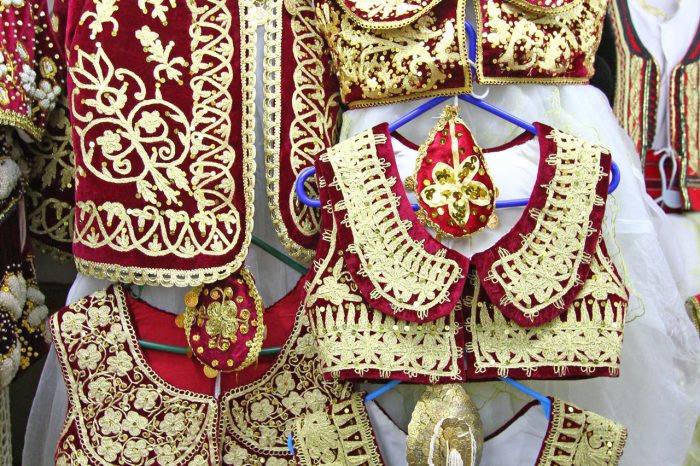
Exploring Albanian clothing is akin to traversing the country’s map, with each region expressing its identity through color, craftsmanship, and pride. Traditional clothing is more than just fabric – it represents identity, pride, history, and craftsmanship. Worn during weddings, festivals, and national celebrations, these garments reflect a deep connection to the land and culture. Each piece conveys layers of meaning through its design, color, embroidery, and accessories, revealing details about the wearer’s origin, social status, age, and marital status. The variety of traditional clothing across the country is remarkable:
- Northern Albania (Malësia, Tropoja, Dibra): Men wear white woolen pants (tirqe) with black embroidery and a fitted vest (xhamadan). The qeleshe (white felt cap) symbolizes Albanian pride and manhood. Women in the northern highlands of Albania, as well as in parts of Kosovo, North Macedonia, and Montenegro wear a traditional, bell-shaped folk garment called xhubleta, which is recognized by UNESCO for its unique shape, structure, and decorative elements and included on the List of Intangible Cultural Heritage. Women also wear pleated skirts, long-sleeved embroidered shirts, heavy aprons, and silver jewelry with protective symbols.
- Southern Albania (Gjirokastër, Berat, Myzeqe): Costumes feature rich gold or silver embroidery, elaborate headpieces, and silk fabrics. The fustanella, a skirt-like garment worn by men, is a key part of warrior dress. Women wear layered clothing, including a chemise, vest, apron, and shawl, styled uniquely by region.
- Central Albania (Tirana, Elbasan, Kruja): Traditional dress reflects urban Ottoman influence with fine textiles, intricate lace, and bright colors. Women’s dresses are elegant, often adorned with floral embroidery and gold-threaded belts.
While contemporary clothing has become commonplace, traditional attire remains revered in Albanian culture. It is worn with pride during celebrations such as Dita e Flamurit, weddings, and folk festivals, serving as a reminder of heritage for younger generations. Artisans, museums, and local communities are dedicated to preserving this cultural legacy, viewing it not merely as fashion but as a vibrant testament to Albanian identity.
Albanian Language – The Language of Legends and Landscapes
Albanian has evolved from Pelasgian and Illyrian and roots, surviving through Roman, Byzantine, Ottoman, and modern times, reflecting the resilience of Albanian culture. Despite outside influences, it retains many ancient characteristics, especially in vocabulary and structure. The Albanian alphabet consists of 36 letters and uses the Latin script since 1908. It follows a phonetic spelling system, where words are pronounced as written. The language is rich in expression, metaphor, and poetic rhythm. Two main dialects are:
- Gheg: Spoken in northern Albania, Kosovo, and parts of Montenegro; features strong nasal sounds and conservative structure.
- Tosk: Spoken in the south and forms the basis of standard literary Albanian used in schools and media. Both dialects are mutually intelligible and valued expressions of Albanian identity.
Albanian is rich proverbs, epic poetry, and oral storytelling has help keep the language vibrant. Traditional songs and blessings reflect the emotional and cultural depth of Albanian speech. Young Albanians and diaspora communities are revitalizing the language through music, social media, and literature. One may ask, why it matters to learn Albanian – learning or hearing Albanian connects you to one of Europe’s oldest cultures, representing strength, hospitality, and poetry. Many other Indo-European languages can find their roots in Albanian language as the only surviving language of Pelasgian language. The Albanian language embodies the nation’s soul, from ancient roots to modern expressions.