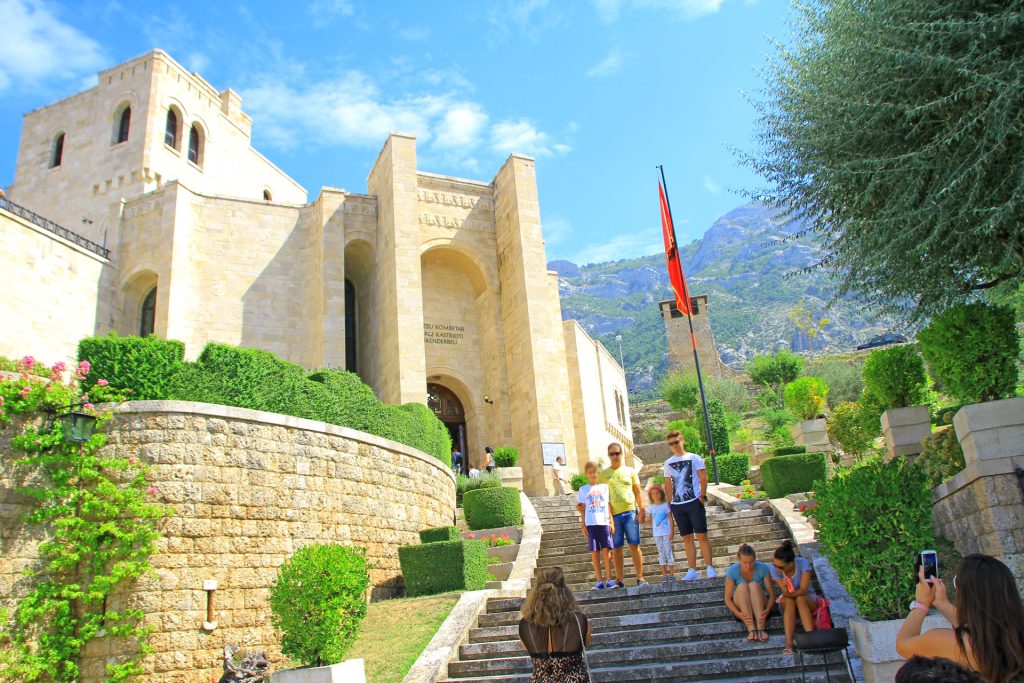
As you ascend to the city of Skanderbeg, the first sight that captivates the eye is the silhouette of Kastrioti Castle, framed by the majestic mountains—a stunning composition that stands testament to the valiant struggles of the past.
Continuing along the path to explore the rich history of the Albanian people, you arrive at the heart of Kruja, where the bronze statue of our National Hero, Gjergj Kastriot Skenderbeu, is nestled within a modern infrastructure. This striking juxtaposition allows the city to thrive amid the contrast of ancient and contemporary eras.
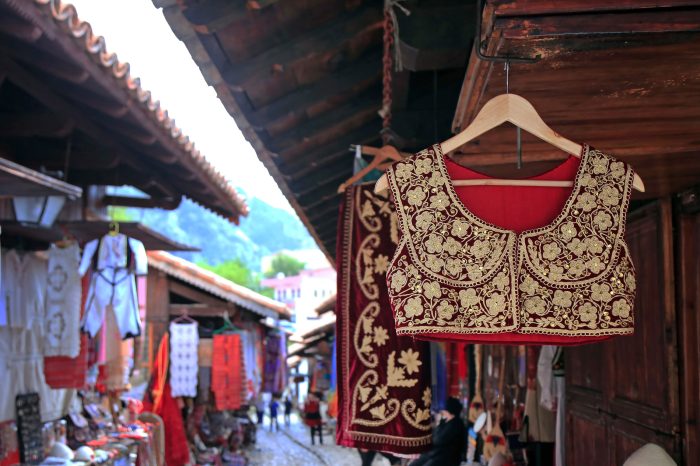
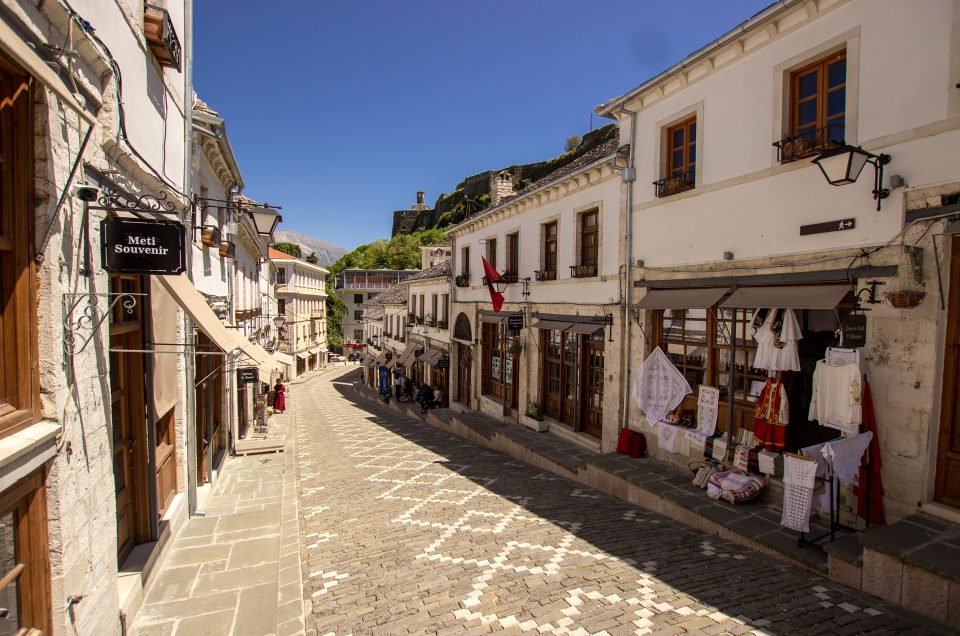
Kruja is renowned for its artisans and the traditional craftsmanship that thrives in the Old Bazaar, known here as the Bazaar of Derexhik. These skilled artisans have inherited the cultural legacy of this historic city through generations. As soon as you step into the cobbled streets of the Old Bazaar, each shop showcases a piece of Kruja’s essence. You can find artisans handcrafting the traditional Albanian fez adorned with the emblem of the eagle, as well as skilled embroiderers creating garments rich in traditional motifs. The sight of women using a peculiar device will draw your curiosity, prompting you to enter their shop. Inside, you will observe them skilfully manoeuvring their hands as they explain that they are crafting a traditional Albanian brawl.
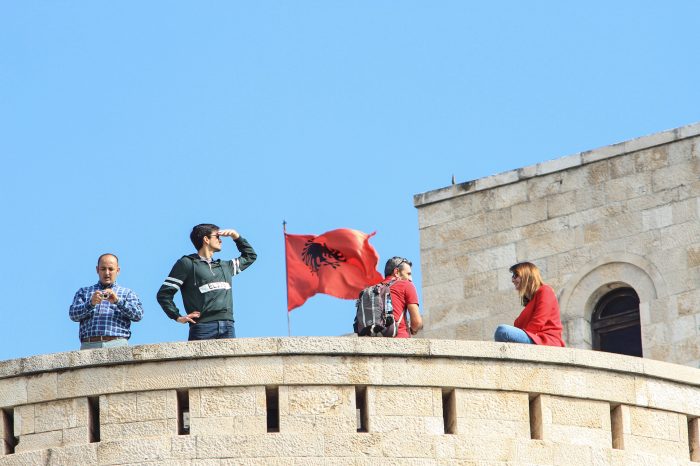
The journey continues as you make you way to the ancient Kastrioti Castle, which once commanded over the fierce Ottoman invaders of the Middle Ages. The Gjergj Kastrioti Museum provides insights into the castle’s origins, the countless battles fought, and the evolution of the Arbëria state, from which Albania name is derived.
Within the castle’s protective walls, one’s attention is drawn to a distinctive Kruja house built in the 18th century, showcasing traditional oriental architecture. Inside, various elements of enduring traditions—lifestyles, clothing, and customs—tell the story of generations past.
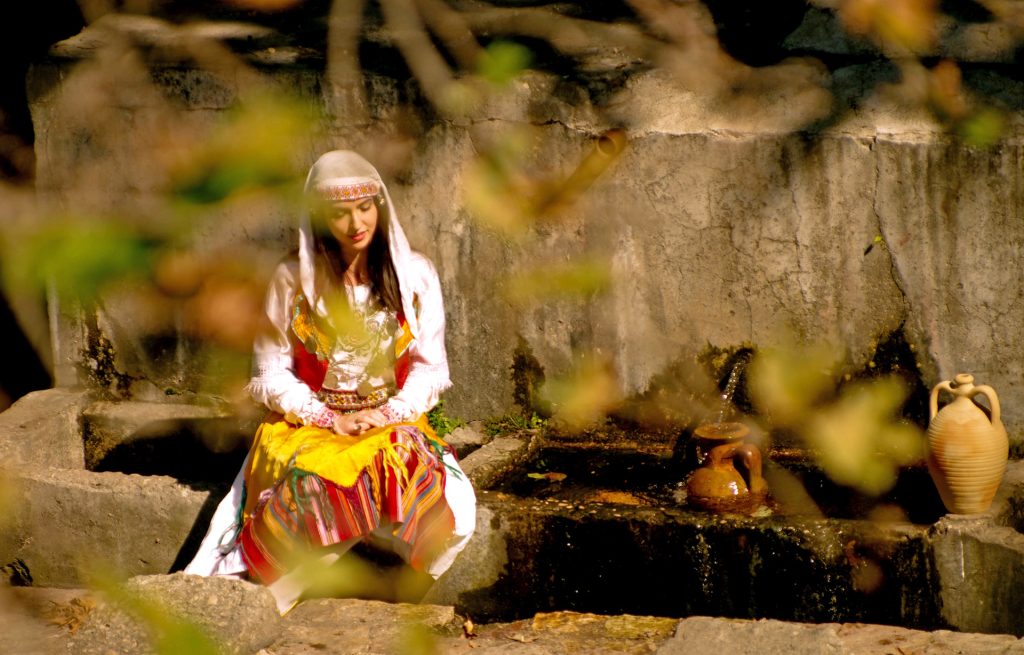
If you seek to savor the refreshing and abundant waters from the natural springs of the mountains, you will find yourself in the right place, as Kruja is blessed with numerous springs that lent the city its name.
Dining in a Kruja home offers the chance to enjoy traditional regional dishes, featuring delights such as milk-baked potatoes, spinach pie, stuffed pickled potatoes, and roasted chicken wedges.
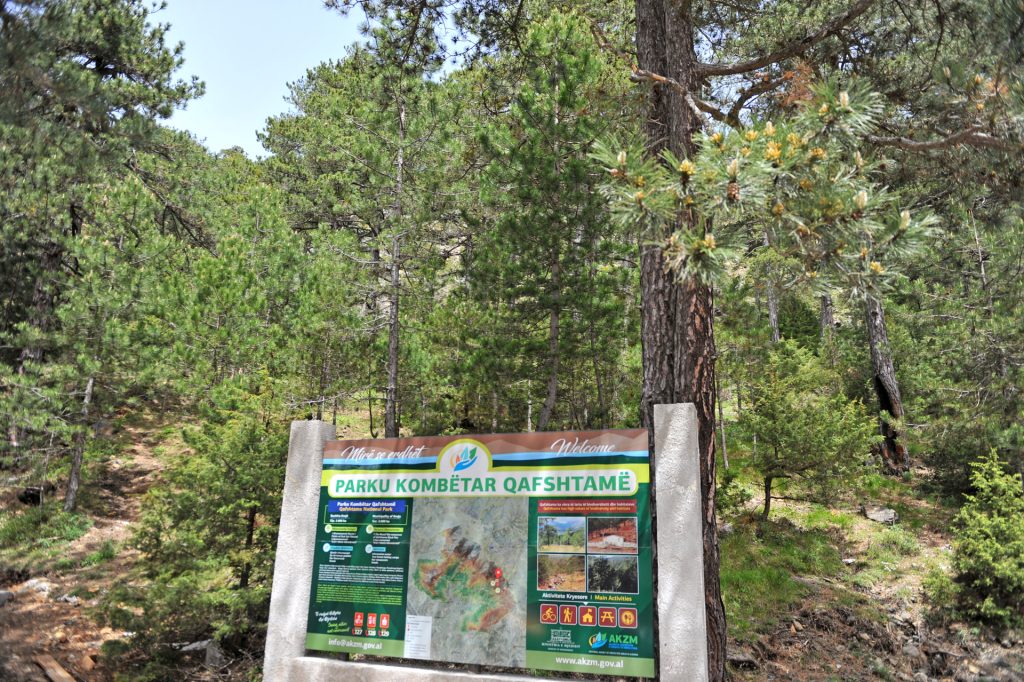
Qafë–Shtama Park is situated 25 km from the city of Kruja, on its northeast side. It can now be accessed via well-maintained roads suitable for all types of vehicles. This park serves as a bridge between the historical regions of Kruja and Mati. The mountain pass reaches an elevation of 1,230 meters, bordered to the south by the Bovilla basin, which shares an ecological connection with the area. Visitors enter the park through the narrow Vaja Canyon, which plunges to depths of 600-700 meters, alongside which the Droja River flows. According to local legend, during the Turkish invasion of Kruja, 90 girls from the town were cast into the abyss to avoid capture. The journey to Qafë-Shtama is accompanied by breathtaking landscapes interspersed with valleys, hills, mountains, and rivers. The park features a circular and pristine forest, making Qafë-Shtama an ideal destination for those medical issues such as sensitive to allergies, chronic respiratory issues, and children. This is why it is often visited on medical recommendations. An intriguing aspect of the Qafë-Shtama area is the summer camps that have been in operation since the reign of King Zog and until the 1990s. A glance at the park quickly reveals its restorative qualities. It is also home to the “Queen” Spring, situated at an altitude of 1,100 meters. This spring received its name because the royal family would spend their weekends there, and according to another version, they would come to collect this exceptionally pure drinking water. The spring is characterized as light, low in salts, yet rich in nutrients.